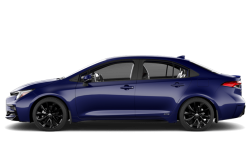

How Frugal Is the 2027 Toyota Corolla Hybrid LE?
September 18 2026,
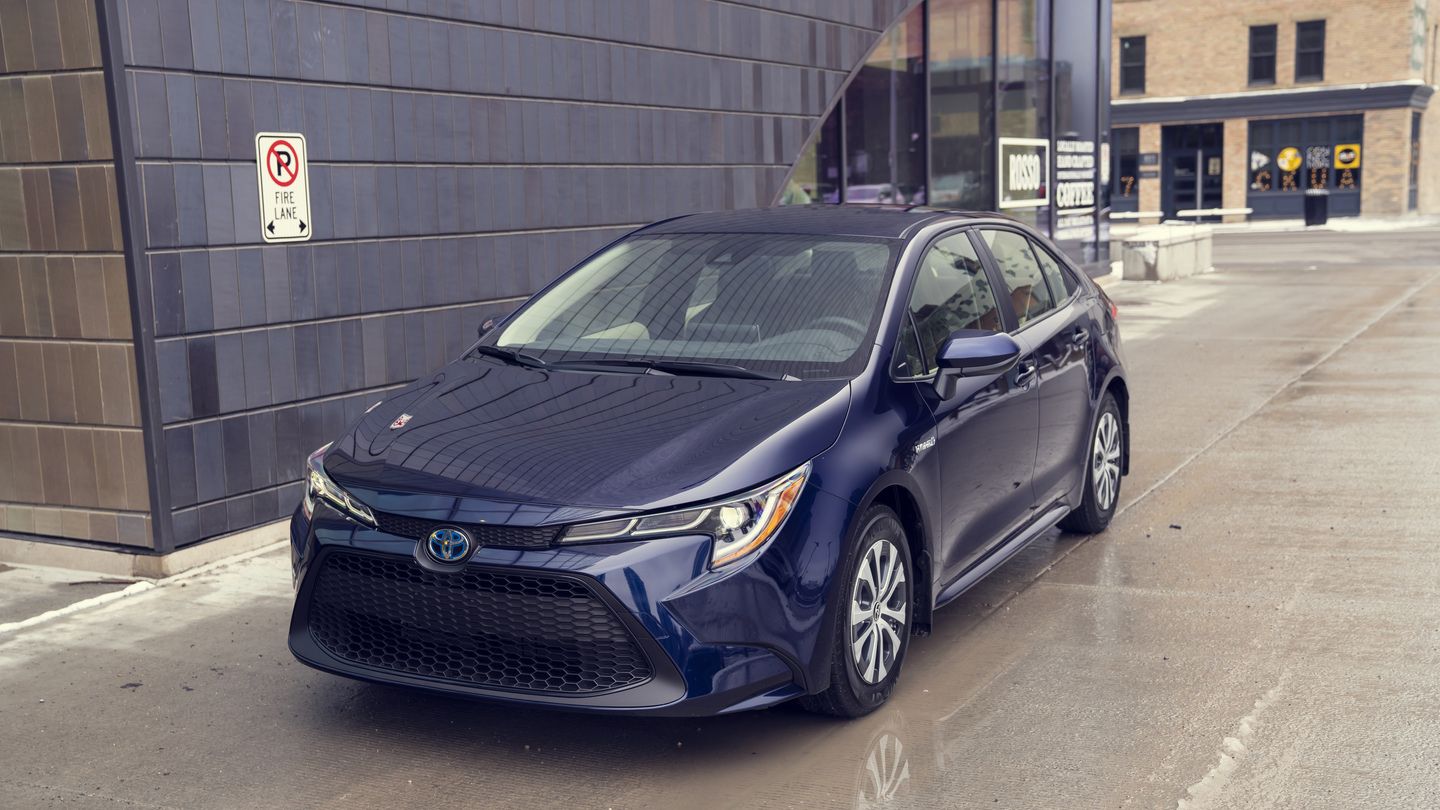
Gas prices don’t care what season it is, and neither does a hybrid powertrain that sips fuel all year. If you’re weighing the 2027 Corolla Hybrid LE against a gas-only compact, the numbers below answer the questions New Brunswick shoppers ask most before they visit a showroom.
How Fuel-Efficient Is the 2027 Corolla Hybrid LE?
The FWD Hybrid LE is rated at 4.4 L/100 km in the city, 5.1 L/100 km on the highway, and 4.7 L/100 km combined. That city number beating the highway number is normal for a hybrid: the electric motor does more of the work at stop-and-go speeds, where a gas engine alone would burn more fuel.
Choose the Hybrid LE with AWD and the numbers shift slightly to 4.6 L/100 km city, 5.3 L/100 km highway, and 4.9 L/100 km combined. The extra hardware for all-wheel traction adds a small fuel-use penalty, but both configurations sit well below the gas Corolla LE’s 6.7 L/100 km combined rating.
|
Drivetrain |
City |
Highway |
Combined |
|
Hybrid LE (FWD) |
4.4 L/100 km |
5.1 L/100 km |
4.7 L/100 km |
|
Hybrid LE (AWD) |
4.6 L/100 km |
5.3 L/100 km |
4.9 L/100 km |
Does Fuel Economy Change With Traffic, Trip Length, or Climate?
Those ratings come from standardized testing, so your real-world number will move with conditions. Short trips in cold weather use more fuel because the gas engine has to warm up before the hybrid system runs at its most efficient. Longer, steady drives let the system settle into a rhythm and post numbers closer to the rated figures.
Heavy traffic can actually help a hybrid, since the electric motor handles more of the stop-and-go load that would otherwise fall on the gas engine alone.
How Does the Hybrid System Actually Work Day to Day?
The Hybrid LE pairs a 1.8 L 4-cylinder engine with the Toyota Hybrid System and an eCVT transmission. Rather than a conventional gearbox, the eCVT blends power from the engine and the electric motor, sending 138 horsepower to the wheels through whichever combination uses the least fuel for the situation.
In stop-and-go traffic, the system leans on the electric motor and EV Mode to move the car without the gas engine running. On steady highway cruising, the gas engine takes over more of the load. For short errands around town, the Hybrid LE is often running mostly on electric power, which is where its city rating comes from.
FWD or AWD: Which Hybrid LE Fits Your Driving?
The FWD Hybrid LE is the more fuel-efficient choice, and it suits drivers who mostly stick to cleared roads and want to stretch every tank as far as possible. The AWD Hybrid LE trades a small amount of efficiency, 4.9 L/100 km combined versus 4.7 L/100 km, for extra traction when the pavement gets slick.
Neither is the wrong answer. If your daily driving is highway commuting and paved city streets, FWD keeps fuel costs lowest. If you regularly deal with unplowed roads, gravel, or want the added confidence of power going to all four wheels, the AWD version is the one built for that.
What’s Included on the Hybrid LE?

The Hybrid LE keeps its equipment focused on daily usability rather than premium extras. Standard features include an 8-inch Toyota Multimedia touchscreen, wireless Android Auto and Apple CarPlay, a 6-speaker audio system, a 7-inch digital gauge cluster, heated front seats, and automatic climate control. Smart Key entry with push-button start and three USB Type-C charging ports are also standard.
Stepping up to the Hybrid SE or Hybrid XSE brings items like a moonroof, a 12.3-inch digital gauge cluster, and a 9-speaker JBL audio system on the XSE, but those trims move the fuel economy rating up to 5.3 L/100 km combined. For a shopper prioritizing efficiency and daily equipment over premium finishes, the LE covers the essentials without the extra fuel cost of the higher trims.
Is There Enough Room for Passengers and Cargo?
The Hybrid LE seats five and offers 371 L of cargo space behind the rear seats, plus 60/40 split-folding rear seats for longer items. Payload is rated at 460 kg on both FWD and AWD versions. That’s enough room for a daily commute, a grocery run, or a weekend trip without feeling cramped.
What Safety Features Come Standard?
Every Hybrid LE includes Toyota Safety Sense 3.0, which groups several driver-assist systems together: Pre-Collision System and Lane Departure Alert for crash avoidance, Lane Tracing Assist for lane support, Dynamic Radar Cruise Control for steady highway driving, and Automatic High Beam for visibility at night. Blind Spot Monitoring with Rear Cross Traffic Alert and Safe Exit Alert rounds out the parking and low-speed awareness features, alongside a standard backup camera.
Quick Answers: 2027 Corolla Hybrid LE at a Glance
- Combined fuel economy: 4.7 L/100 km (FWD) or 4.9 L/100 km (AWD)
- Powertrain: 1.8 L 4-cylinder hybrid, 138 hp, eCVT transmission
- Seating and cargo: 5 passengers, 371 L behind the rear seats
- Safety: Toyota Safety Sense 3.0 standard, plus Blind Spot Monitoring
Who Should Consider the Hybrid LE?
The Hybrid LE suits commuters logging regular kilometres who want lower fuel bills without stepping into an unfamiliar ownership routine. It also works well for first-time hybrid buyers, since the eCVT and Toyota Hybrid System operate without any extra driver input, plug-in charging, or added maintenance steps.
Efficiency-focused households cross-shopping a gas Corolla against the hybrid will find the fuel savings add up quickly over daily driving, especially compared to the gas LE’s 6.7 L/100 km combined rating. This article focuses on the Hybrid LE specifically rather than the full Corolla lineup, since it’s the trim most New Brunswick shoppers land on when fuel economy is the deciding factor.
Book a Look at the 2027 Corolla Hybrid LE at Acadia Toyota
The 2027 Corolla Hybrid LE pairs a 1.8 L hybrid system with everyday equipment and a fuel-economy rating built for commuting, errands, and weekend driving around New Brunswick.
Visit Acadia Toyota in Moncton to compare the Hybrid LE against the gas-powered Corolla in person, ask about trade-in value, and get current details on availability.